Immunotherapy: its types, method of administration, side effects.
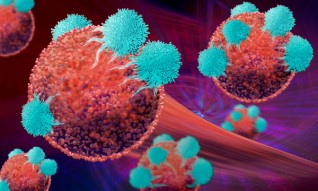
In 2018, immunologists James Allison and Tasuku Honjo received the Nobel Prize for the development of a new method of cancer treatment — immunotherapy.
It does not destroy malignant cells, like, for example, chemotherapy, but instead helps our immune system to "find" the tumor and fight it further.
Worldwide, cancer poses a serious threat to human health and is one of the leading causes of death.
For decades, surgery, chemotherapy, and radiation therapy have been the main methods of treating tumors in patients.
However, the development of resistance to chemotherapy and/or radiation therapy is associated with a high incidence of cancer recurrence.
Cancer treatment can reduce physical activity and impair the immune response, which can lead to relapse, as well as metastasis of remaining tumor cells in the body after treatment.
Thus, scientists urgently need to find new strategies for killing treatment-resistant cancer cells. Over the years, it has been proven that immune cells are important targets for cancer.
Immunotherapy is considered the fourth treatment method after surgery, chemotherapy, and radiation therapy.
What is cancer immunotherapy and how does it work?
Tumor cells arise from ordinary cells in our body. But every day, mutations occur in the DNA of a large number of cells. Under the influence of the external environment, such as smoking or UV radiation, the risk and number of mutations increase.
Some mutations are incompatible with the life of the cell, and when they appear, it dies. Another part of the mutated cells is detected and destroyed by the immune system.
When cells accumulate a large number of mutations, they begin to behave uncontrollably and become cancerous.
Such cells gradually find an opportunity to hide from our immune system and remain unnoticed by it for a long time, this is necessary for their survival and growth.
A fundamental property of our immune system is the ability to distinguish "our own" from "someone else's" so that it can attack and destroy invading bacteria, viruses and other dangers.
Therefore, the main idea of immunotherapy is simple: to help the body protect itself from harmful "invaders".
However, tumor cells are insidious. Hiding from the immune system, they use methods to disable the body's defenses when it tries to attack them.
Immunotherapy is a treatment method that uses the body's immune system to fight diseases, especially cancer.
The immune system consists of various types of specialized white blood cells (including cells called lymphocytes) that attack pathogens and other invaders.
Modern cancer immunotherapy focuses on two types of lymphocytes, depending on the immune system: T cells and natural killer cells (NK cells).
We all know that there is innate and acquired immunity.
Innate immunity is a system that is embedded in the body. She constantly monitors the condition of the body and quickly launches an attack against the penetration of foreign substances.
Acquired immunity reacts to foreign substances that break through the "first line of defense."
It has a powerful destructive power and attacks "strong enemies" such as cancer cells.
One of the warriors of the "innate immune system" is NK cells, Natural killer cells.
And the warriors of acquired immunity are T cells (CTL = killer, T cells)
T-cell immunotherapy
Most types of T-cell immunotherapy are based on the ability of T cells to recognize an antigen on the surface of a malignant cell. After a T cell recognizes a specific cancer antigen, the body makes multiple copies of that T cell so that they can find other cancer cells with that antigen and attack them.
Some T cells can also remember the antigen and react to it the next time they encounter it. This "memory" is very important, because thanks to it, T-cell immunotherapy can prevent the resumption of the growth of malignant cells with this antigen (recurrence of the disease).
T-cell immunotherapy includes the use of immune response checkpoint inhibitors, vaccines, cytokines, and T-cell transfer. Over the past decades, T-cell immunotherapy has established itself as a powerful and often curative strategy for the treatment of blood cancer.
Immunotherapy with NK cells
Natural killer cells (NK cells) were discovered by Gerberman's group in the 1970s. They play an important role in the initial (innate) immunity.
N-cells are lymphocytes that destroy tumor cells and virus-infected cells without antigenic sensitization. In childhood, the number of NK cells in the human body is quite large, but it decreases with age, as a result of which the risk of cancer increases.
NK cell immunotherapy is also called cell therapy in biological immunotherapy. NK cells are usually extracted from the patient's body or the child's umbilical cord blood, activated and cultured in the laboratory so that they can effectively detect and destroy tumors and other harmful cells, and then return them to the patient's body. The advantage of therapy lies in the fact that the number of NK cells can be increased thousands of times through in vitro cultivation, and then significantly enhance the body's immunity after their reintroduction into the human body, providing a dual therapeutic and preventive effect.
How is immunotherapy performed?
Immunotherapy drugs are administered intravenously or directly into the tumor area. Immunotherapy involves the administration of several doses of the drug over a period of time. Treatment can be carried out according to a specific scheme that changes the cycle of treatment and rest (like chemotherapy).
Side effects of immunotherapy:
The side effects of immunotherapy depend on the specific treatment method, but in general, the symptoms are the result of activation of the immune system. When the immune system is activated, inflammation develops. This may be a local or generalized response, as immune cells invade those parts of the body where malignant cells are found.
Often, the symptoms are similar to those that appear when the body is fighting an infection, such as a cold or flu.
Patients may experience fever, chills, body aches, rash, and fatigue-this is what is called a "cytokine storm." In this case, the patient should be under the constant supervision of a doctor.
In which countries is immunotherapy performed?
Immunotherapy is currently performed in almost all countries. However, in some countries, such as Russia, they are carried out according to limited protocols (not for all types of diseases).
These methods are most often used now in the USA, Japan, and China.
These countries occupy leading positions in the study and application of immune therapy in the treatment of almost all types of oncology.