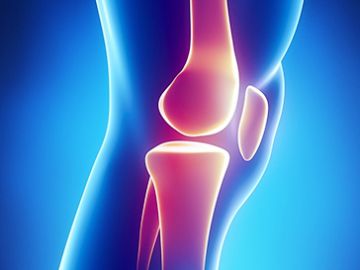
Gonarthrosis or osteoarthritis of the knee is a degenerative process of the knee joints. Initially, the disease develops asymptomatically. One of the main components of the joint, hyaline cartilage— consists of 95% water. When the knee is working, this cartilage releases fluid. When the pressure stops, it absorbs the lost water along with vitamins. Cartilage degeneration begins when the joint is subjected to more stress than it can handle (with heavy weight, prolonged standing or walking), and does not have time to recover. Over time, ruptures occur, causing a peculiar sound (cracking), pain, limited mobility, and joint deformity.
Diagnosis and treatment of gonarthrosis abroad
Gonarthrosis is often diagnosed by the characteristic symptoms and X-ray results. Arthroscopy, ultrasound, CT, MRI, thermography, and scintigraphy may also be prescribed. It is not yet possible to completely cure osteoarthritis, but there are ways to slow its progression, reduce pain and improve knee mobility.
Invasive treatment of gonarthrosis abroad
At the initial stage of osteoarthritis, conservative treatment is used, including physiotherapy, weight loss, anti-inflammatory drugs and analgesics. In case of serious injuries, gonarthrosis treatment abroad includes endoprosthetics. If only the inner or outer part of the joint is damaged, a partial endoprosthesis is installed. The implant helps to get rid of pain and restore full knee mobility.
Modern prostheses are available in clinics abroad that ensure knee stability even with severe bending. The technology of the movable bearing on the rotary platform reduces pressure on the joint and ensures a long service life of the endoprosthesis (more than 30 years).
If the kneecap is destabilized during the course of the disease, arthroscopic cutting of the connective tissue outside the patella and stitching of the tissue from the inside is performed. Thus, the cup is again in the correct position relative to the hip. In some cases, patella stabilization is performed using a bone graft.
For young patients with initial signs of gonarthrosis, treatment abroad includes corrective osteotomy. This is the process of changing the shape of the bone to restore the correct structure of the joint.
During arthroscopy of the knee joint, all changes are carried out through a small hole. The minimally invasive procedure does not damage the connective tissue, provides better visibility of the internal structures of the knee and shortens the rehabilitation time.
Gonarthrosis treatment with stem cells
Stem cell therapy helps to stop the development of osteoarthritis of the knee and promotes the restoration of its destroyed parts. Stem cells are taken from the patient's own body, then they are cultured in the laboratory and reinjected into the damaged area. In this way, the body can heal itself naturally.
Other modern treatment of gonarthrosis abroad includes the injection of platelets. Platelets stimulate the stem cells of the problem area to treat damaged tissues.