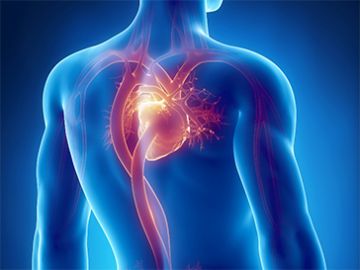
Atherosclerosis is a narrowing of the artery duct due to the deposition of cholesterol plaques, which prevents blood from being delivered to internal organs. The outcome of the disease is malnutrition (ischemia) and tissue necrosis.
At an early stage, the disease does not cause symptoms. When an artery narrows severely in some part of the body, pain and cramps may occur, such as chest pain when one of the coronary arteries is blocked.
Diagnosis of atherosclerosis abroad
If, during a physical examination, the doctor suspects the development of atherosclerosis, he may prescribe the following tests to confirm the diagnosis:
- blood tests;
- ECG;
- ECHO;
- CT scan of the heart (reveals the level of calcium accumulation on the heart walls);
- chest X-ray (determines heart failure);
- ankle-shoulder index (assessment of the uniformity of blood pressure);
- stress test using physical activity or medication (may detect ischemia).
In clinics abroad, angiography is performed to diagnose atherosclerosis. This state-of-the-art testing helps to study the internal area of the vascular system using dye and special X-rays. During the procedure, the doctor inserts a catheter into the patient's leg or arm and moves it into the narrowed part of the artery. Then the paint is injected through the tube. Angiography shows the presence of plaques inside the arteries and how severe the blockage is.
Treatment of atherosclerosis abroad
Even in the late stages of atherosclerosis, the first line of treatment is to take medications. If the drugs do not help, surgery is prescribed. Surgery of narrowed vessels has two main directions: stenting or bypass surgery. A new complex operation, hybrid revascularization, is being performed in hospitals abroad for patients with severe illness.
Surgical treatment of atherosclerosis abroad is based on minimally invasive methods (using catheters and small holes). This provides a short period of hospitalization, a low risk of complications and a quick recovery.
Stenting
Percutaneous stenting – angioplasty – is performed immediately after angiography using the same device. Using tiny tools at the end of the catheter – a laser, a blade, or an inflatable balloon –the specialist removes the blocking plaques.
The stent itself is a miniature cylinder made of wire mesh. When the balloon on the catheter is inflated, the stent is straightened and fixed in place of the destroyed plaques to prevent repeated blockage.
Coronary angioplasty has a low complication rate, relieves chest pain and restores blood flow after a heart attack. Recovery time is often less than one day.
Bypass surgery through small incisions
During bypass surgery, the surgeon takes a segment of a blood vessel from a leg or arm and "sews" it onto the coronary artery, directing blood around the blocked area. This surgery relieves chest pain caused by atherosclerosis and increases the survival rate of patients with multiple or severely blocked vessels. In hospitals in Germany, Korea, China, and Israel, bypass surgery is performed through a small incision using robotic equipment.

 South Korea
 China
China
 India
India