Diagnosis of housing and communal services abroad
Diagnosis of gallstones abroad includes:
- laboratory tests of blood, urine, and bile;
- CT;
- MRI;
- Ultrasound of the abdominal cavity;
- holescintigraphy;
- Endoscopic retrograde cholangiopancreatography is an examination of the bile ducts in the gallbladder. The dye used in this case allows you to identify blockages (the procedure can be combined with the removal of detected stones).
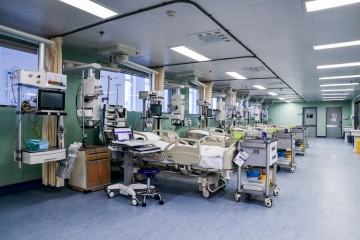
In the treatment of cholelithiasis abroad, diagnosis is carried out using the most modern equipment, which increases the accuracy of determining the patient's condition.
Treatment of GKB abroad
Treatment of cholelithiasis abroad is carried out according to an individual comprehensive plan that takes into account the course of the pathology and the body's response to therapy. Simple cases can be treated on an outpatient basis. Complex cases require surgical treatment.
Methods of treatment of cholelithiasis abroad:
- medical treatment. Allows you to dissolve stones with volumes up to 15 millimeters;
- surgical treatment of cholelithiasis abroad. The stones are removed laparoscopically or with the help of a surgical robot through small punctures in the peritoneum. These surgical methods leave only inconspicuous scars and significantly reduce the risk of infection. After such an operation, inconspicuous scars remain, and the patient's recovery is faster than with classical surgery;
- endoscopic papillotomy. It involves dissection of the hepatic-pancreatic ampoule to ensure the release of stones along with bile;
- Laparoscopic cholecystectomy is the surgical removal of the gallbladder along with stones through small punctures. This method of treatment of cholelithiasis abroad is considered a prerogative direction, is carried out before complications develop and involves mandatory intraoperative examination of the biliary tract.

 South Korea
 China
China
 India
India