Rehabilitation after surgery abroad includes all the necessary rehabilitation procedures, which are prescribed depending on the specific problems.
Rehabilitation on simulators
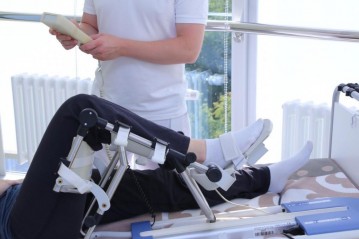
It is most often used for patients who have undergone neurosurgical and orthopedic operations (on the brain and spinal cord, on the spine). Modern simulators are designed for postoperative restoration of the functionality of affected muscles and joints:
- The MedX simulator for the lower back — not only measures the strength of the muscles of the lumbar region, but also strengthens them without surgical intervention.
- The Unweighting Support System is indispensable for early rehabilitation after surgery abroad. The running and walking simulator is equipped with a support device to help maintain balance and stay on your feet.
- anti—gravity treadmill - allows you to walk without experiencing the slightest pressure on damaged joints. Use is possible immediately after surgery.
- kinesotherapy on a sling suspension system — during a special massage, the patient is lifted off the ground with the help of special equipment.
These and similar simulators allow you to influence the affected area with repetitive functional movements, contributing to its reverse training.
Transcranial stimulation
It is effective for rehabilitation after neurosurgical operations abroad. A weak current is applied to the skull and brain, which stimulates the motor cortex of the brain responsible for movement, as well as neuroplastics. Neuroplastics is the ability of healthy cells located around the affected area of the brain to reconnect with neighboring cells and restore information transmission.
Electrical impulses are also used to stimulate nerves through muscles, which contributes to the functional recovery of individual tissues.
Virtual Reality rehabilitation
In an artificial virtual world generated on a computer, the patient can identify himself and cope with various problems:
- phantom pains after limb amputation (3D modeling is used);
- impaired coordination of movement after brain damage.
General services
In addition to robotic and physiotherapeutic recovery techniques, rehabilitation after surgery abroad involves a number of services in other specializations.:
- Cardiology;
- Pulmonology;
- Radiology;
- Neurology;
- Microbiology;
- Urology;
- psychology;
- Speech therapy;
- pediatrics.
Thus, foreign specialists comprehensively monitor the recovering body.
Rehabilitation after surgery abroad, relying on the latest technologies and effective techniques, allows you to quickly and painlessly overcome a variety of problems.

 South Korea
 China
China
 Türkiye