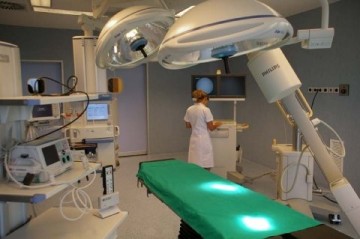
Treatment of uterine cancer abroad is a great opportunity to undergo an accurate diagnosis using the latest equipment and receive timely, fruitful treatment.
Diagnosis of uterine cancer abroad
Foreign medicine practices all the leading methods of diagnosing uterine tumors:
- Computed tomography (CT). The examination consists of a layer-by-layer scan of the uterus and obtaining a series of three-dimensional images using X-rays. They are processed by a computer to obtain a final three-dimensional image.;
- magnetic resonance imaging (MRI). Instead of X-rays, electromagnetic waves are used here. Once on the surface of the uterus, they are reflected from it, and the "response" is recorded by the receiving device. At the same time, the body is not exposed to radiation exposure, as in the case of CT, and the procedure does not carry the slightest risk. And a scan of the uterus using the innovative MRI 3.0 technology provides much more detailed images.;
- Positron emission tomography (PET). Images of cancerous tumors of the uterus are obtained using radiation from positrons (positively charged particles). Before the procedure, a contrast agent containing micro-doses of positronic elements is injected intravenously into the patient. The procedure is painless. Contraindicated for pregnant women!
Treatment of uterine cancer abroad
Treatment of uterine cancer abroad, depending on the stage of development of the disease, can take various forms.
In the early stages, surgical removal of the tumor is preferable. Minimally invasive techniques are used to minimize damage to the uterus during surgery.:
- Laparoscopy is the removal of a tumor through small incisions (from 0.5 to 1.5 cm),
- robotic surgery is the removal of a neoplasm using a robot controlled by a surgeon.
Chemotherapy is often used in conjunction with uterine artery embolization, which is a blockage of the vessels that supply blood to the uterus. This allows you to stop the growth of the tumor, relieve pain, and stop uterine bleeding.
In the later stages, when surgical intervention can no longer help, various forms of ablation (non-surgical removal of the tumor) are used to treat uterine cancer abroad:
- gamma knife: spot irradiation of a tumor with low-intensity gamma waves. As a rule, one radiation session is enough. However, to achieve the best result, the procedure can be repeated for 2-4 days.;
- Nano knife: removal of uterine tumor by strong electric fields. The operation is performed under general anesthesia: electrodes are inserted into the required area to directly affect the current on the neoplasm.;
- Cryosurgery: the tumor is destroyed through intense exposure to deep cold, which is produced using either liquid nitrogen or liquid argon.
Proven and effective methods combined with extensive professional experience make the treatment of uterine cancer abroad the most effective.