Treatment and diagnostics for abroad

Stomach ulcer
  • Discount users service

    to 7%
  • Treatment success:

  • Number of clinics for stomach ulcer treatment:

    187

Stomach ulcer

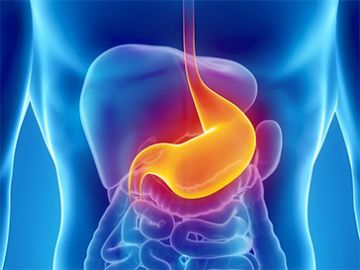
A stomach ulcer is a local, eroded lesion of the mucous membrane. Symptoms of the disease include pain and burning in the abdomen, swelling, loss of appetite, nausea or vomiting. The two most common causes of ulcers include:

H. pylori bacteria, which weakens the protective layer of the stomach, making it vulnerable to stomach acid;
Anti-inflammatory drugs such as aspirin, ibuprofen and diclofenac irritate the mucous membrane and, together with the action of digestive juices, cause ulcers.

Read more Collapse

Examination before treatment of stomach ulcers abroad

If a stomach ulcer is suspected, the patient undergoes a series of laboratory tests to detect the H. Pylori bacterium, including blood, stool, and respiratory tests. The breath test is the most reliable. During the procedure, the patient takes in a small amount of radioactive carbon. The bacterium destroys this substance, forming radioactive carbon dioxide. Then the patient exhales into a special bag. If a decomposition product is detected, it means that a bacterium is present.

Visualization of the mucous membrane of the esophagus, stomach and duodenum is provided by endoscopy. A small flexible tube with a camera at the end passes through the mouth and transmits the image to the screen. If the doctor finds an ulcer, a biopsy is also performed during the procedure (a tissue sample is taken to look for malignant cells).

An additional way to visualize stomach ulcers is CT with contrast. The patient takes a liquid with a small amount of barium, which covers the mucous membrane of the digestive tract. As a result, all the damage on the X-ray becomes more noticeable.

Treatment of stomach ulcers abroad

Medical therapy is mainly used abroad for the treatment of stomach ulcers. Most people take medications for 4-6 weeks to kill all the H. Pylori bacteria and keep acid levels low until the ulcer heals completely. The following drugs are used for this:

  • antibiotics such as Amoxil, Tindamax, and others;
  • proton pump inhibitors — Omeprazole, Rabeprazole, Pantoprazole and a number of other drugs — reduce the level of hydrochloric acid in the stomach, blocking the functions of parietal cells;
  • histamine blockers — Ranitidine, Cimetidine, Fomatidine – also reduce the acidity of gastric juice.;
  • Antacids help with pain by neutralizing excessive acidity in the stomach;
  • cytoprotective drugs such as Misoprostol protect the mucous membrane of the stomach and intestines.

Surgical treatment of stomach ulcers abroad

For patients with stomach ulcers, surgery is only necessary if complications occur. As a rule, one of the following operations is performed:

  • Vagotomy is the removal of one or more nerves of the stomach in order to reduce acid production.;
  • pyloroplasty is the expansion of the lower opening of the stomach;
  • Partial gastrectomy is the removal of a painful part of an organ.

Surgical treatment of stomach ulcers abroad includes minimally invasive approaches using a laparoscope or a Da Vinci robotic system.

Learn more Collapse
Calculate cost treatment stomach ulcer
Treatment reviews stomach ulcer abroad
Leading doctors
Kwon Jin Woo
  • Graduated from Hallim University.
  • Clinical Lecturer in Gastroenterology at "Sonsim" Clinic and "Inha" Medical Center.
  • Specialization: gastrocolonoscopy, endoscopic treatment. Civil Aviation Aviation Medical Examiner.
Learn more Collapse
Lee Moon Seong
  • Pioneer in the field of endoscopic surgery: first in the country to remove part of the esophageal mucosa using an endoscope to treat early-stage cancer.
  • Ranked among the top ten doctors in Korea.
  • Received awards for scientific achievements from the Korean Society of Gastrointestinal Endoscopy, Korean Society of Gastroenterology, Korean Institute of Science and Technology, etc.
  • Specialization: Stomach, esophageal, liver, intestinal diseases; diagnosis and treatment of oncological diseases of the gastrointestinal tract organs.
Learn more Collapse
Kim Hyeon-cheol
  • Head of the liver transplantation team. Success rate: 100%.
  • Specialist in the treatment of liver, gallbladder, and pancreatic diseases - organs whose treatment requires skillful surgical skills.
  • Completed internships in Japan, Germany, France, Spain.
  • In 2006, received an award from the International Hepato-Pancreato-Biliary Association (IHPBA); in 2010, received the "Best Dissertation" award from the Korean Association of Clinical Oncologists.
  • Author of textbooks on surgery and clinical surgery, co-author of the "Atlas of Surgical Operations".
Learn more Collapse
Moon Jeong-ho
  • Vice-Director of the Korean Society of Gastrointestinal Endoscopy (KSGE), holds one of the leading positions in the Korean Pancreatobiliary Association (KPBA).
  • Develops new endoscopic methods for treatment and diagnosis, used for malignant strictures and other conditions hindering access.
  • Specialization: Endoscopic diagnosis and treatment of pancreatic, gallbladder, and bile duct diseases, gastroenterological diseases.
Learn more Collapse
Kim Yong-seok
  • In 2011, was recognized as the winner in the "Best Dissertation" nomination by the Korean Association of Internal Medicine (KAIM).
  • Develops practical guidelines for the treatment of cirrhosis and alcoholic hepatitis.
  • Completed internships at Kansai Medical University (Japan) and UC Davis University (USA).
  • Member of the Korean Association for the Study of the Liver (KASL), Deputy Head of the Research Division at the Korean Liver Cancer Study Group (KLCSG), specialist at the Ministry of Food and Drug Safety, member of the Health Assessment Commission, editor of the encyclopedia on liver diseases. Member of the Publications Committee of the Asian Pacific Association for the Study of the Liver.
  • Specialization: Liver diseases, hepatitis, cirrhosis, fatty liver disease. Diagnosis and treatment of inoperable pathologies.
Learn more Collapse
Search clinics
Treatment abroad? It's easy!
Get a treatment plan and cost estimate for free!
Attach a file

Need an urgent reply?
Request a callback

Selected: 0 clinics Compare