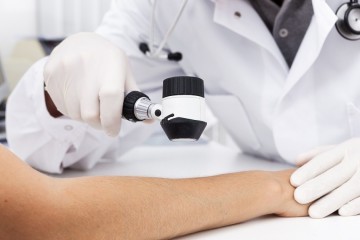
Clinics for the treatment of skin diseases, in addition to dermatoscopy, use other imaging methods for skin lesions.
- Confocal laser microscopy allows obtaining high-resolution images of the epidermis and upper layers of the skin. This method is particularly suitable for the diagnosis of melanocytic tumors.
- Optical coherence tomography has a lower resolution of the image compared to confocal microscopy, but provides a view of the deep layers of the skin. The technique is mainly used to visualize epithelial cancer and verify the effectiveness of prescribed treatment.
- Impedance spectroscopy allows you to see the irregularities of cells. This procedure is used to diagnose skin diseases of a malignant nature, such as melanoma.
- Multispectral analysis involves illuminating the skin with different wavelengths. The method is used to study dysplastic nevi.
Modern approaches to dermatological diagnosis abroad ensure early detection of skin cancer and help to avoid unnecessary surgery for benign neoplasms.
Invasive diagnosis of skin diseases abroad
Many skin diseases, cancers, or infections are diagnosed by biopsy. The procedure involves removing a small area of skin for analysis in a laboratory. A sample of skin cells helps to determine the cause of the pathology and exclude the presence of diseases with similar symptoms. Several types of biopsies are used during the diagnosis and treatment of skin diseases abroad:
- razor biopsy – taking a sample of a problem area of the skin with a razor;
- Puncture biopsy is the removal of a small round area of skin with the capture of deeper levels.;
- Excision biopsy is the removal of most of the abnormal skin and possibly surrounding tissue.
Treatment of skin diseases abroad
Clinics abroad use modern minimally invasive methods for the treatment of skin diseases, including cryosurgery, resection of neoplasms with a CO2 laser, radiofrequency ablation and infrared light treatment. Procedures such as microdermabrasion, chemical peels, and plasma therapy are available for scar removal and acne therapy. PRP (Platelet Rich Plasma) therapy is a cutting–edge skin treatment and rejuvenation that uses the patient's own blood to stimulate collagen and improve facial texture and elasticity. Due to the stimulation of the natural regenerative ability, plasma therapy is also suitable for stopping the process of hair loss in men and women.

 South Korea
 China
China
 Singapore