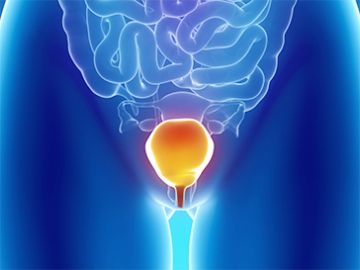
However, treatment of bladder cancer abroad is a chance to use the latest technologies to effectively combat the disease. Foreign clinics practice a combined approach to treatment, including various minimally invasive methods. Such methods make it possible to remove the neoplasm without causing significant harm to healthy tissues.
Diagnosis of bladder cancer abroad
Treatment of bladder cancer abroad is preceded by the most accurate diagnostic procedures that allow us to model the most effective treatment strategy:
- Computed tomography (CT) is a layered scan of the bladder on a CT scanner using X—rays;
- Magnetic resonance imaging (MRI) — magnetic fields are used to scan the bladder, so that the patient's body is not exposed to X-rays (as is the case with CT). The images are also taken in layers, but the image is even clearer.;
- Positron emission tomography with CT (PET-CT) — after performing a standard CT scan, positrons (positively charged particles) are injected intravenously into the patient, which act as indicators in the study of metabolism in the bladder. A PET scan is performed, the results of which are evaluated in combination with the results of a CT scan to obtain more accurate information about the nature of the neoplasm in the bladder.;
- Biopsy is a method of laboratory examination of a cancerous tumor aimed at determining the benign/malignant nature of the neoplasm. Both a piece of the tumor and the entire neoplasm can be taken for analysis.
These techniques are used by foreign clinics to diagnose tumors and detect metastases.
Treatment of bladder cancer abroad
Minimally invasive techniques are used abroad for effective treatment of bladder cancer.:
- Endoscopy is a minimally invasive surgery to surgically remove a bladder tumor using an endoscope that is inserted into the organ through the urethra. There are no skin incisions.;
- Radiosurgery — a bladder tumor is exposed to ionizing radiation, which leads to the biological death of cancer cells. For this purpose, high-tech equipment is used, such as nano-knives and gamma knives; at the same time, the tumor is exposed from the outside.;
- Brachytherapy is the insertion of an ionizing radiation source into the bladder. The advantage of this form of radiotherapy is the possibility of exposing the maximum doses of radiation therapy directly to the tumor, while adjacent tissues are not exposed to radiation. The anatomy of the bladder makes this method the most convenient and effective.
Treatment of bladder cancer abroad will allow patients not only to undergo high-quality diagnostics using the latest equipment, but also to successfully remove the tumor with minimal harm to the body.

 South Korea
 China
China
 India
India