Ophthalmology in hospitals Germany

Advantages and achievements of German medicine

Treatment in Germany attracts a huge number of foreigners for a reason: the most promising and innovative therapeutic methods in Europe are available in the country's clinics. German doctors masterfully cope with such complex tasks as complete excision of the affected organ with simultaneous reconstructive plastic surgery, non-invasive and non-contact hardware vaporization of neoplastic foci, replacement of one or more joints within the framework of a single surgical intervention, organ transplantation from related and unrelated donors.

Among the tactics used by German doctors, the following are popular:

  • procedures on cyber knife, gamma knife and nano knife installations;
  • robot-assisted operations of various localization;
  • organ-preserving and radical surgical interventions for malignant tumors;
  • radiotherapy (classical radiation therapy using cutting-edge linear accelerators, brachytherapy, ion therapy, etc.);
  • minimally invasive correction of heart and aortic defects (congenital and acquired);
  • laser and radiofrequency ablation;
  • therapeutic and diagnostic coronary angiography;
  • cardiac catheterization;
  • myocardial and heart + lung complex transplantation;
  • bypass surgery of all types;
  • mono- and polychemotherapy with personally selected medicines;
  • immunotherapy and targeted therapy (optionally combined with chemotherapy);
  • minimally invasive discectomy and vertebroplasty;
  • build-up of cartilage tissue and bone plastic;
  • primary and secondary joint replacement.

The country's clinics are implementing experimental programs in which patients can enter on free or preferential terms. A full-fledged diagnosis is a mandatory service point. The necessary conditions are provided for her in German medical and diagnostic institutions.: high-tech equipment, standard and rare laboratory reagents and reagents, advanced instrumentation. The equipment of the clinics is thoroughly checked 2-3 times a year. All operating institutions are certified by German, European and international commissions for quality control of services.

There are famous sanatoriums and resorts in the country where patients can undergo rehabilitation under professional supervision or support the body during treatment.

Treatment in Germany is considered the most effective in Europe, as evidenced by open official ratings. Here it is possible to get effective help even for those who have been recognized as "hopeless" by other doctors.

The cost of care in clinics in Germany

Treatment in Germany is considered expensive. The cost of comprehensive diagnostic programs starts at 1,200 euros, operations and other invasive manipulations – from 5,500 euros, depending on the purpose, volume and complexity. At the same time, prices for services here are 15-20% lower than in neighboring Austria, the United States and the United Kingdom. The final price of the service also depends on the type of institution chosen (private or public), location, rating, and other parameters.

Patient reviews of treatment in Germany

Among the reviews of people about the service in medical and diagnostic institutions in the country, negative and even neutral ones are extremely rare. Most patients focus on a careful approach to the problem, taking into account individual characteristics, painlessness and comfortable transfer of procedures, and careful monitoring during therapy. Therapeutic programs for rare and intractable diseases are available in Germany. People note the high level of service, hearty meals, convenience and comfort of hospital stay.

Citizens of the EU member states, Russia, Ukraine, China, and North and South America most often seek help from German doctors.
Learn more Collapse
Best clinics in the world for this direction
1change.jpg
BGN Eye Hospital Busan South Korea, Busan
Discount for our customers 3%
Price segment Middle
DSC_9740.JPG
Yanda Hospital China, Beijing
Foreign patients in year 1200
Price segment Middle
izmircankayamerkez.jpg
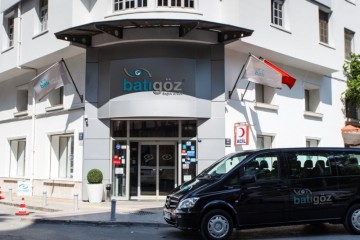
Batıgöz Türkiye, Izmir
Price segment Middle
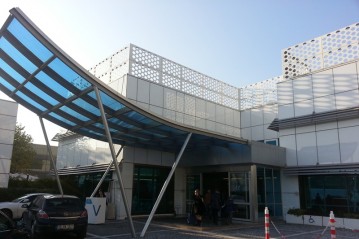
20141128_144639.jpg
LIV Hospital Türkiye, Istanbul
Price segment Middle
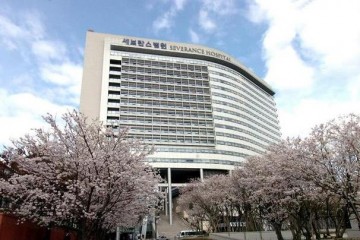
Severance hospital.JPG
Severance Hospital South Korea, Seoul
Discount for our customers 3%
Foreign patients in year 30200
Price segment Premium
4.jpg
Ospedale San Raffaele Italy, Milan
f15b2fe111def73e5a5d377b5d55ad25.jpg
Hangil Eye Hospital South Korea, Incheon
Discount for our customers 3%
Price segment Middle
10517465_740243386038941_1586473068037550832_n.jpg
Interbalkan Medical Center Greece, Thessaloniki
-tK04nuwX5U.jpg
Jensin Clinic China, Beijing
Foreign patients in year 12700
Price segment Middle
Leading doctors
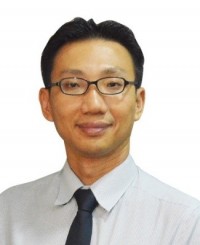
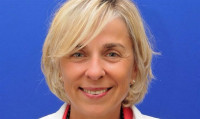
Anat Levinstein

Completed residency at the Sourasky Medical Center. Remained there and successfully continued her career.

Currently is the head of the ophthalmology department at the Sourasky Medical Center.

Actively engaged in scientific activities. She is the author of over 220 research papers dedicated to the theory and practice of ophthalmology. Laureate of five prestigious awards for scientific achievements in her field.

Learn more Collapse
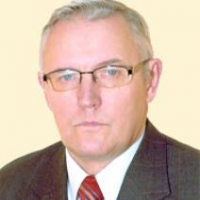
Shishkin Mikhail Mikhailovich

M.M. Shishkin is a talented ophthalmic surgeon, teacher, and an authoritative specialist in the field of vitreoretinal surgery in Russia. Author of 74 scientific papers.

Graduated from the Military Medical Faculty at the Tomsk Medical Institute. From 1976 to 1978, he worked as an ophthalmologist at a training center in Cuba.

1978–1980 — residency in ophthalmology at the Military Medical Academy.

1985–1991 — head of the department at the military hospital of the Leningrad Military District.

1991–2002 — conducted research work at the Department of Ophthalmology of the Military Medical Academy. Progressed from senior resident to Chief Ophthalmologist of the Ministry of Defense of Russia.

In 1993, he defended his Candidate of Sciences (Ph.D.) dissertation on: "Volumetric-quantitative surgery of complicated forms of retinal detachments." In 2000, he defended his Doctor of Sciences dissertation on: "Anterior proliferative vitreoretinopathy (pathogenesis, treatment, prevention)."

Since 2002, he has been working as the Chief Ophthalmologist of the National Medical and Surgical Center named after N.I. Pirogov, head of the department and director of the ophthalmology clinic.

Specialization: treatment of cataracts, eye injuries, eye surgery, microsurgical interventions, treatment of chalazion, trachoma, viral conjunctivitis, correction of visual acuity disorders, restoration of eye function in cases of retinal and optic nerve damage, reconstructive procedures for ptosis and paralytic strabismus.

Learn more Collapse
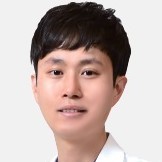
Shin Min Gyu
  • Specialization: retinal diseases.
  • Member of the Korean Ophthalmological Association, the Korean Retina Society, and the Ocular Vascular Society.
  • Associate professor at the medical faculty of Pusan National University.
  • Head of the ophthalmology department at Huncheon Hospital.
Learn more Collapse
Kim Yong Hee
  • Specialization: dry eye syndrome, contact lens fitting.
  • Member of the Korean Ophthalmological Association, the Korean Society of Cataract and Refractive Surgery, and the Korean Society of Ophthalmic Plastic Surgery.
  • Professor and leading specialist in the ophthalmology department of Kosin University Hospital and Bohun Hospital.
  • Certified specialist in ICL and SMILE technologies.
Learn more Collapse
Reviews about treatment in Germany by ophthalmology
Search treatment
Treatment abroad? It's easy!
Ophthalmology in hospitals Germany - average rating 4.4
based on 2 reviews
Get a treatment plan and cost estimate for free!
Attach a file

Need an urgent reply?
Request a callback

Selected: 0 clinics Compare